How We Built DayZ DDoS Mitigation: Capacity Is the Easy Part
VYKIX's engineering account of DayZ filtering: changing packet patterns, A2S query pressure, pulse waves and Rearmed's reported 1.6 Tbps campaign.

On this page
Building protection for DayZ hosting means making packet decisions while players are trying to join and play. An upstream network can absorb a large flood, but the filter still has to distinguish abusive traffic from the exchanges the game expects.
That is the thread running through our VxShield development account. StalkerZ’s attack patterns changed across successive rounds. KarmaKrew faced query abuse. Escape From DayZ saw repeated bursts during a wipe. Each called for attention to a different part of the traffic path.
These cases explain why we worked on separate network, query and game-session controls. The flood size mattered, but so did what each packet asked the server to do.
Capacity Is the Easy Part
Our published 17 Tbps figure describes the protection network’s filtering capacity. It does not state what one server can absorb or whether a particular game session stayed connected.
Capacity buys room to process traffic. The next decision is which packets to accept. A copied signature can look familiar without belonging to a valid session, so structure, rate and session context also matter.
We use XDP/eBPF filtering at the edge for VxShield’s DayZ processing. The aim is to reject invalid traffic before the game process has to handle it, while preserving valid exchanges. That makes classification part of the protection work, not something left to the application after the network has absorbed the flood.
Part 1: The First Real Test, an Attacker Who Adapted
StalkerZ came to us after attack-related problems at its previous host. Our migration account is supported by the customer’s retained message, though we do not have the former hosting configuration.
The subsequent campaign is described as four changing rounds over more than 24 hours. An initial flood gave way to packets resembling DayZ traffic, followed by a distributed push with a reported 643 Gbps peak and then further payload changes.
We described updates to session and payload checks as those patterns changed. The exact peak and sequence come from our account; the retained charts show campaign activity. The StalkerZ breakdown follows the four rounds.
The campaign stopped after the fourth round, according to our account. For the filter, the lesson was to keep reviewing the decision: a rule that addresses one pattern still needs testing when the payload changes.
Part 2: A2S Floods and Pulse Waves, the Constant Stuff
A2S abuse targets the server-query path. A player can have trouble finding a server even when the game process is running, so browser queries and game joins need separate checks.
Our early-2025 KarmaKrew account describes that query pressure. For supported DayZ A2S_INFO requests, cached status replies reduce repeated listing work at the origin. The query path can then be handled separately from player sessions. Read the KarmaKrew account.
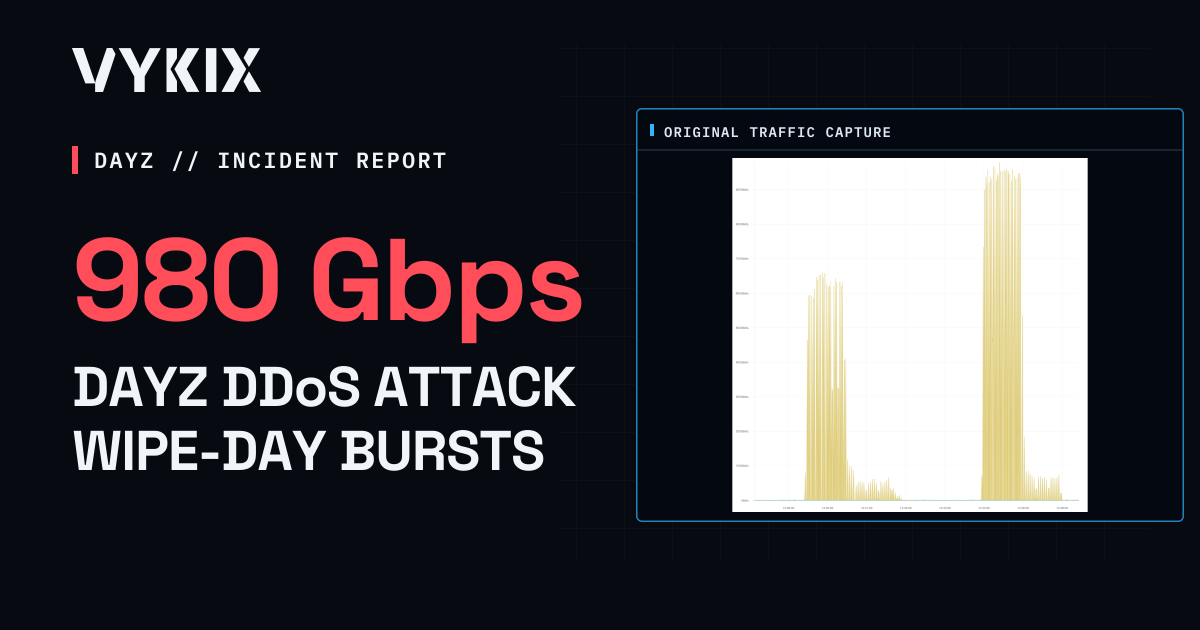
Escape From DayZ presented another pattern: repeated bursts during a wipe, with a reported peak near 980 Gbps. The captures show traffic rising and falling rather than one steady flood. For an owner, that makes the quieter gaps worth watching too: keep assessing the traffic instead of treating a dip as the end of the incident. Read the pulse wave account.
Part 3: Forged Packets, the One That Worried Us
Traffic that resembles a game packet is harder to classify with a port number or volume threshold alone. Blocking the whole port would also block the people you are trying to keep connected.
Our Echoes of Chernobyl account describes a move from OVH after attacks involving forged DayZ traffic. The classification comes from that account; no incident packet capture is retained.
A matching signature needed context: packet structure, request rate and the state of the session. Those checks give the filter more to work with than the header alone. The packet-spoofing case explains the distinction.
The Reported 1.6 Tbps Rearmed Campaign
Our retrospective reports a 1.6 Tbps campaign against Rearmed involving TCP, UDP and game/query abuse. It also reports that the server remained available.
Those details come from our retrospective; the raw traffic export and uptime logs are not retained. The campaign belongs in this history, with that limit on what we can substantiate today.
Where We Stand Now
The common task across these cases is to review what the network received, inspect the filter decisions and test changes against the affected traffic path.
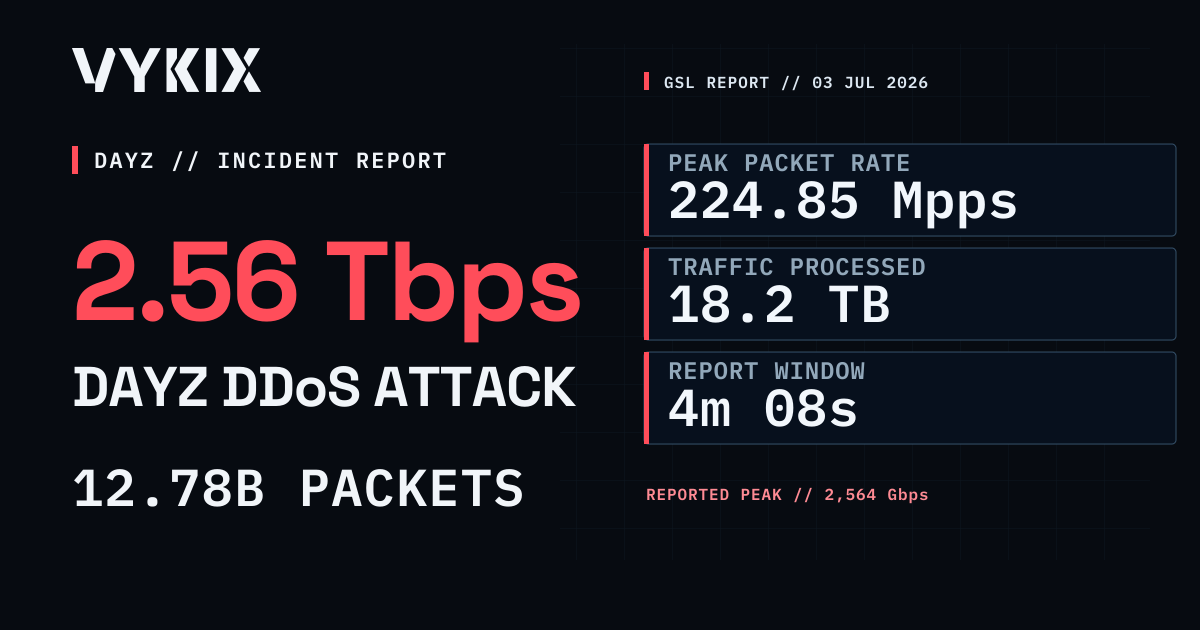
The later 2.56 Tbps Ground Zero report gives a more detailed view of network scale. When reviewing an incident, pair that network view with game and session records: one shows the traffic, the other shows what players experienced.
Our DayZ DDoS protection guide collects the current protection model and the questions to ask about it.
Common Questions
How is DayZ-specific DDoS mitigation different from generic DDoS protection?
DayZ-aware filtering adds packet-structure, rate and session checks to network controls. Those checks help decide which traffic belongs to a valid exchange. Coverage depends on the product, active profile and configuration, so the label alone cannot predict an incident outcome.
Does more DDoS mitigation capacity mean better protection?
Capacity helps prevent bandwidth exhaustion. Packet-processing capacity and traffic classification matter too: a network can have spare bandwidth while the game or query path struggles with abusive requests.
What is the hardest DayZ DDoS attack to stop?
We do not rank them on one scale. A large flood can exhaust network resources; traffic that resembles valid game packets creates a classification problem. The deployment needs evidence and tests for both.
VxShield is included with VYKIX plans. Eligible switchers can use our best-effort migration offer after we confirm the scope; terms apply. See DayZ server hosting plans or ask VYKIX on Discord.
Game-aware DDoS protection for your server.
Run your game server with VxShield included. Ask about free migration and seven days free for eligible customers switching hosts. VYKIX confirms the scope, timing, and terms before the move.
Continue with